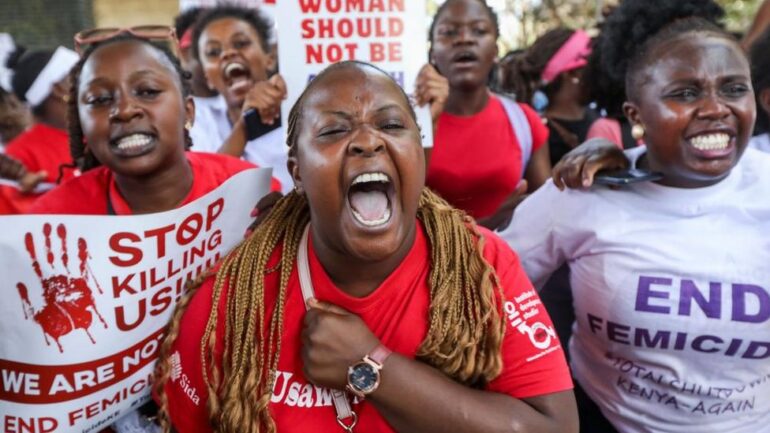

For many women in Kenya, fear has become an integral part of everyday life. Femicide is intentionally killing women and girls simply because they are women. It is not an isolated tragedy. It is a national crisis rooted in violence, misogyny, inequality, and systems that too often fail to protect victims before it is too late. In Kenya, the situation has become impossible to ignore. Human rights organizations and activists reported a sharp rise in femicide cases in recent years. In early 2024, the Kenyan government acknowledged the severity of the crisis after more than 100 women were reportedly killed within just four months.
Behind every statistic is a woman whose life mattered. Some were university students. Some were mothers. Some were daughters who had dreams, jobs, friendships, and futures waiting for them. Femicide does not begin with murder. It begins with control. With stalking. With threats. With humiliation. With normalized violence. And when societies dismiss these warning signs as “private matters,” women are left vulnerable.
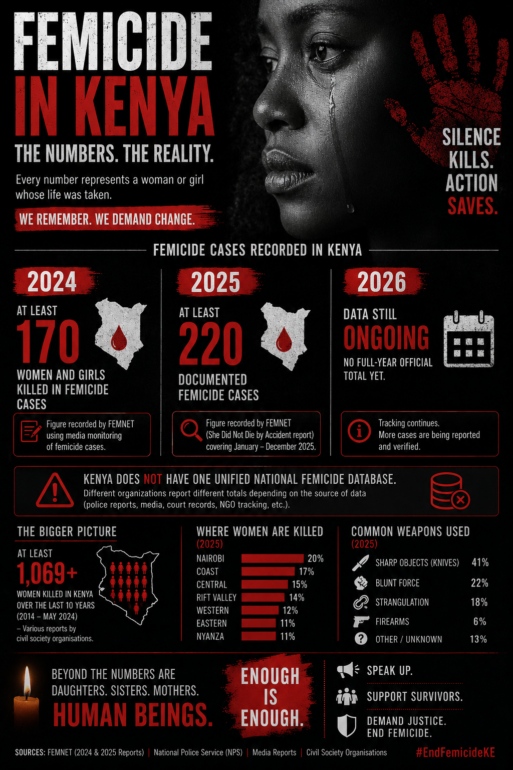
For many Kenyan women and girls, danger exists in spaces that should feel safest; homes, relationships, schools, workplaces, and online spaces. The impact reaches far beyond the victims themselves. Children lose mothers. Families lose daughters and sisters. Communities lose leaders, students, professionals, and caregivers. Young girls grow up internalizing fear as part of womanhood. When society asks, “Why was she there?” instead of “Why did he kill her?” it shifts responsibility away from perpetrators. Activists in Kenya have repeatedly criticized narratives that scrutinize women’s behavior while excusing male violence. But there is another side to this story: resistance. Across Kenya, women have marched in the streets demanding justice. Protesters have carried signs reading “Stop Killing Women” and “End Femicide.” Thousands have spoken openly online, refusing to let victims become forgotten headlines. Their message is simple: women deserve to live. Laws alone are not enough. Kenya already has legal protections against gender-based violence, but activists argue enforcement remains weak. Real change requires faster investigations, stronger protection orders, survivor-centered policing, accessible shelters, mental health support, and education that challenges violent masculinity and misogyny from an early age. Communities also play a role. Friends must take threats seriously. Families must stop forcing women to remain in dangerous relationships. Police must respond before violence escalates. Men must challenge other men who normalize abuse. Safety for women cannot depend solely on women protecting themselves. Still, until systems improve, many women continue relying on survival strategies: sharing locations with trusted friends, avoiding isolated places, documenting threats, seeking support networks, and learning to recognize patterns of coercive control. These precautions may reduce risk, but they are not solutions. Women should not have to live as if danger is inevitable. Ending femicide means changing the belief that women’s lives are disposable. It means building a Kenya where girls grow up believing freedom is their birthright, not a privilege earned through fear and caution. It means ensuring that women who report violence are protected instead of ignored. It means refusing to normalize headlines about murdered women as routine news. Because the true measure of a society is not how loudly it mourns women after they die but how fiercely it protects them while they are alive.